Shopping Cart (0)
Close
 dcaccoolingfan.com
This page is prepared and maintained by dcaccoolingfan.com as a technical reference for industrial cooling fan selection. The content focuses on real application behavior of AC, DC, and EC cooling fans, rather than purely theoretical specifications.
Author: DCAC Cooling Fan Technical Team
Last Updated:
Estimated Reading Time: 15-20 minutes
Content Type: Comprehensive Technical Guide
Comprehensive technical reference for AC, DC, EC, USB cooling fans, window ventilation systems, and stove blower fans across industrial, residential, and commercial applications. Browse by category and evaluate performance parameters for optimal system design and thermal management.
AC / DC / EC / USB / Window Ventilation / Stove Blower
Use system requirements and performance parameters for compatibility guidance.
Product sections include application notes; refer to engineering considerations for details.
Complete technical reference and evaluation guides linked in navigation.
Six core categories covering AC, DC, EC, USB cooling fans, window frame ventilation fans and stove blower fans, with comprehensive technical resources and application guidance.
Direct category access for technical reference and system design guidance.
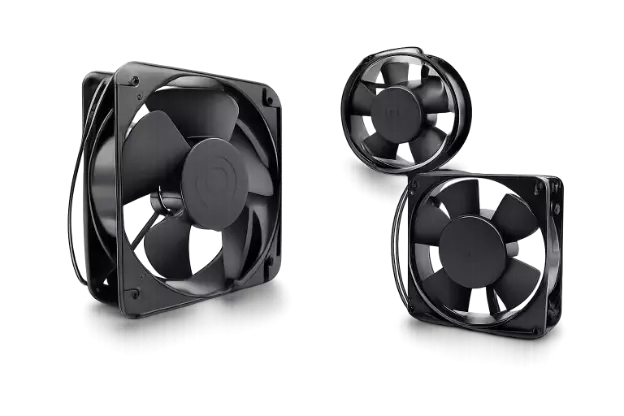
AC cooling fans operating from alternating current power sources. Suitable for electrical cabinets, automation equipment, and industrial enclosures where constant-speed operation and direct mains connection are required.
View AC Fans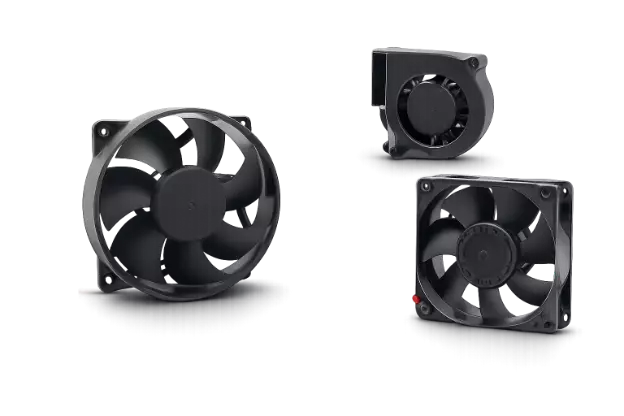
Low-voltage DC cooling fans with flexible speed control via voltage adjustment or PWM signals. Ideal for electronics, power supplies, and systems requiring variable speed operation and noise management.
View DC Fans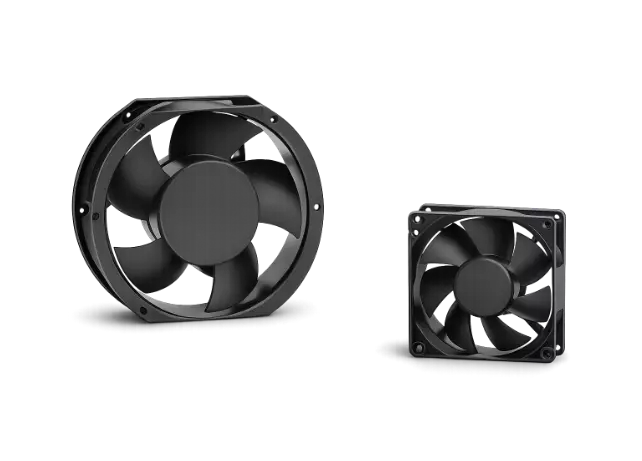
Electronically commutated fans with integrated control electronics. Designed for variable thermal loads where energy efficiency, precise airflow regulation, and dual AC/DC input capability are essential.
View EC Fans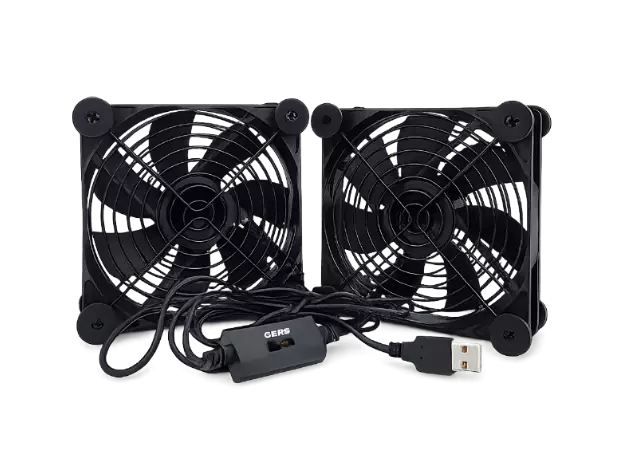
USB powered cooling fans operating from standard 5V USB power sources. Suitable for portable applications, computer cooling, small enclosures, and systems requiring universal power compatibility across different regions.
View USB Fans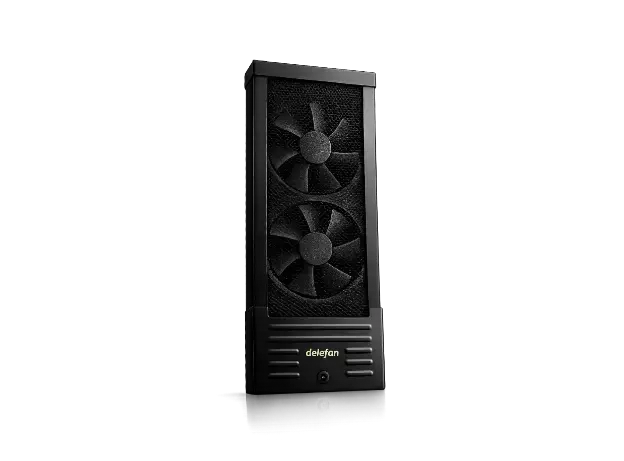
Non-invasive window frame mounted multi-fan ventilation systems. Features adjustable mounting, stepless speed control, and weather-resistant design for residential and commercial indoor air quality applications.
View Window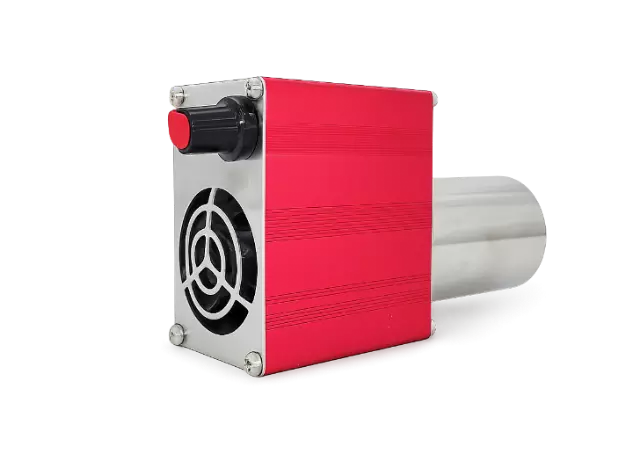
High-performance dual-fan combustion assist blowers for wood stoves, gasification stoves, and outdoor cooking equipment. Features stepless speed control and dual 5V/12V power support for portable applications.
View StoveIn many industrial systems, cooling issues are not caused by insufficient airflow, but by mismatched fan types, unsuitable control methods, or operating conditions that were not fully evaluated during the design stage.
Based on long-term observations across different applications, incorrect fan selection is one of the most common reasons for excessive noise, unstable temperatures, and shortened service life.
The complexity arises because cooling fan performance depends on the interaction between the fan's characteristic curve and the system's impedance curve. A fan that performs well in free air may deliver significantly less airflow when installed in an enclosure with filters, heat sinks, or restricted pathways. Engineers must evaluate the operating point where these curves intersect, not just the maximum airflow rating.
Additionally, thermal management requirements vary throughout a system's lifecycle. Initial design calculations often assume steady-state conditions, but real-world operation involves startup transients, load variations, and environmental changes that affect cooling demand. A fan selected for peak load conditions may be inefficient during normal operation, while a fan sized for average conditions may fail during thermal spikes.
AC cooling fans operate directly from alternating current power sources. They are typically applied in electrical cabinets, automation equipment, and industrial enclosures where constant-speed operation is sufficient and wiring simplicity is valued. For detailed specifications and applications, see our AC Cooling Fan Guide.
The motor design in AC fans relies on the alternating magnetic field created by the power supply frequency, which means their speed is inherently tied to the line frequency in many designs. This characteristic makes them predictable in stable power grid environments but less adaptable when variable speed is needed. AC fans generally provide higher power output for larger frame sizes, making them common in heavy industrial applications where robust construction and direct mains connection are advantages. For motor cooling and thermal management standards in industrial applications, see IEEE Standard 841 (Premium-Efficiency, Severe-Duty, Totally Enclosed Fan-Cooled Motors).
In regions with different grid frequencies, such as 50 Hz versus 60 Hz systems, AC fan speed and airflow will differ even with identical voltage. Engineers must account for this when specifying fans for global deployments or when equipment may operate in multiple electrical environments.
DC cooling fans run on low-voltage power such as 12V, 24V, or 48V. They allow flexible speed control through voltage adjustment or PWM signals, making them suitable for electronics, power supplies, and systems with noise or space constraints. For PWM control details and voltage specifications, refer to our DC Cooling Fan Guide.
The brushless DC motor architecture uses permanent magnets and electronic commutation, enabling precise speed control independent of power supply frequency. This makes DC fans particularly useful in battery-powered systems, renewable energy applications, and equipment that must operate across different voltage standards without modification.
PWM control allows DC fans to maintain consistent torque characteristics across a wide speed range, which is valuable when thermal loads vary. The control signal frequency and duty cycle directly influence both airflow and acoustic performance, requiring careful controller design to avoid audible switching noise while maintaining responsive thermal management. For technical details on PWM control principles and brushless DC motor operation, see Pulse-Width Modulation and BLDC (Brushless DC Electric Motor) technical references.
USB cooling fans represent a specialized category of low-voltage DC fans that operate from standard USB power sources, typically providing 5V DC power through USB-A, USB-C, or micro-USB connectors. These fans are designed for applications where portability, universal power compatibility, and simple integration with computing devices are priorities. For USB power considerations and portable applications, see our USB Cooling Fan Guide.
The USB power standard provides a consistent 5-volt supply across different regions and device types, making USB fans particularly suitable for global deployment without voltage conversion requirements. USB 2.0 specifications deliver up to 500mA at 5V, providing 2.5W of power, while USB 3.0 and USB-C Power Delivery can supply significantly higher currents for more powerful fan configurations. Engineers must verify the power requirements of USB fans against the available USB port capacity to ensure reliable operation, especially when multiple devices share the same USB hub or power source. For official USB Power Delivery specifications, refer to USB Implementers Forum (USB-IF) standards and IEC 62680 series standards.
USB cooling fans often incorporate integrated speed control modules with multiple operating modes, typically offering off, low, and high speed settings through mechanical switches or electronic controls. The low-speed mode reduces power consumption and acoustic output while maintaining basic airflow, making it suitable for continuous operation in office environments or noise-sensitive applications. High-speed mode provides maximum cooling capacity for thermal management during peak load conditions or in warmer ambient environments.
In practical applications, USB fans are commonly used for localized cooling of electronic enclosures, computer components, small server racks, and portable equipment. The universal USB interface eliminates the need for dedicated power supplies or complex wiring, simplifying installation in retrofit applications or temporary cooling solutions. However, engineers should consider that USB power limitations restrict these fans to relatively small frame sizes and lower airflow capacities compared to mains-powered AC or higher-voltage DC fans.
Environmental considerations for USB fans include operating temperature ranges, which may be more limited than industrial-grade fans due to the compact design and lower power dissipation capabilities. In regions with high ambient temperatures or extended operating periods, thermal management of the USB fan motor itself becomes important to prevent overheating and ensure reliable long-term operation. The compact form factor and integrated control modules make USB fans suitable for space-constrained applications, but may limit serviceability compared to modular fan designs with separate control systems.
EC cooling fans use electronically commutated motors with integrated control. They are often chosen for systems with variable thermal loads, where energy efficiency and precise airflow regulation are important. For energy efficiency benefits and dual input capability, see our EC Cooling Fan Guide.
EC technology combines the benefits of AC and DC approaches by incorporating an integrated drive circuit that can accept both AC and DC input power. The internal electronics convert the input to the optimal form for the motor, enabling efficient operation across a wide input voltage range. This dual-input capability simplifies system design in applications where power sources may vary or where future power system changes are anticipated.
The integrated control electronics in EC fans enable advanced features such as constant airflow control, temperature-based speed regulation, and communication interfaces for system integration. These capabilities make EC fans suitable for modern building automation, data center cooling, and other applications where intelligent thermal management reduces overall energy consumption while maintaining performance. For thermal management guidelines in data center and building automation applications, refer to IEEE/ASHRAE Guide 1635 (Ventilation and Thermal Management of Batteries for Stationary Applications) and IEEE 2969 (Guide for Continuous Thermal Monitoring of Switchgear and Motor Control Centers).
When evaluating EC fans, engineers should consider that the integrated electronics add complexity and potential failure modes compared to simpler AC or DC designs. However, the improved efficiency and control capabilities often justify this trade-off in applications with long operating hours or strict energy requirements.
Window frame ventilation fans represent a specialized category of multi-fan ventilation systems designed for non-invasive installation in existing window frames without requiring structural modifications, drilling, or permanent mounting hardware. These systems address indoor air quality challenges in residential and commercial spaces where traditional ventilation solutions are impractical due to building constraints, rental restrictions, or temporary installation requirements. For installation information and applications, see our Window Ventilation Fan Guide. For ventilation standards and indoor air quality requirements, refer to ASHRAE Standards 62.1 and 62.2 (Ventilation and Acceptable Indoor Air Quality).
The core design principle involves modular fan arrays that mount directly onto window frame edges using adjustable clamping mechanisms, eliminating the need for wall penetration, ductwork installation, or ceiling integration. This approach enables ventilation in spaces where poor air circulation, humidity accumulation, or localized air quality issues require targeted air exchange without extensive building modifications.
Adjustable mounting systems accommodate various window frame dimensions through telescopic or expandable mechanisms, typically providing several centimeters of adjustment range to fit different window configurations. This flexibility supports installation across multiple window types including casement windows, sliding windows, and double-hung windows, making these systems suitable for diverse building environments and window standards found in different regions and construction practices.
Multi-fan configurations distribute airflow across the window opening width, with individual fans operating in parallel to achieve higher total airflow rates compared to single-fan units. The distributed design reduces localized turbulence and provides more uniform air exchange across the ventilation area. Fan arrays can be configured for unidirectional exhaust, intake, or reversible operation depending on application requirements and seasonal ventilation needs.
Stepless speed control enables precise airflow adjustment to match ventilation demands across different conditions. Low-speed operation provides continuous background ventilation with minimal acoustic impact, suitable for bedrooms, offices, or noise-sensitive applications. Higher speeds deliver increased air exchange rates for rapid removal of odors, humidity, or localized contaminants during cooking, cleaning, or high-occupancy periods.
Acoustic performance is critical in residential applications, particularly for bedrooms, nurseries, or spaces requiring quiet operation during extended periods. Advanced motor designs incorporating magnetic bearing technology or brushless DC architectures reduce mechanical noise generation, enabling multi-fan systems to operate at acceptable sound levels even during high-speed operation. The distributed fan configuration also helps reduce perceived noise compared to single large fans operating at equivalent airflow rates.
Energy efficiency considerations are important for systems designed for continuous or extended operation. Low-power motor designs and efficient fan blade geometries minimize power consumption while maintaining adequate airflow performance. Total system power consumption for multi-fan arrays typically ranges from 20 to 50 watts depending on fan count and operating speed, enabling 24-hour operation with minimal energy impact compared to traditional ventilation systems requiring higher power consumption.
Environmental protection features address outdoor exposure challenges inherent in window-mounted installations. Weather-resistant construction materials and protective mesh screens prevent water ingress during rain exposure while maintaining airflow capability. Insect screens integrated into the ventilation path prevent entry of mosquitoes, flies, and other pests that could compromise indoor air quality or create nuisance conditions. The protective mesh design must balance airflow resistance with effective barrier function to maintain ventilation performance.
Maintenance accessibility is enhanced through modular construction that allows individual fan units to be removed for cleaning without disassembling the entire system. This design supports regular maintenance to remove accumulated dust, debris, or contaminants that could reduce airflow efficiency or create hygiene concerns. Washable components and water-resistant construction enable direct cleaning methods that simplify maintenance procedures compared to permanently installed ventilation systems.
Application scenarios include residential spaces experiencing poor air circulation, high humidity conditions, or localized air quality issues in kitchens, bathrooms, bedrooms, or living areas. The non-invasive installation approach makes these systems suitable for rental properties where permanent modifications are restricted, temporary installations requiring portability, or retrofitting existing buildings where traditional ventilation installation would be prohibitively complex or costly.
In kitchen applications, window frame ventilation fans provide targeted exhaust for cooking odors, steam, and airborne particulates without requiring range hood ductwork or ceiling modifications. Bathroom installations address humidity control and odor removal where traditional exhaust fan installation may be impractical. Bedroom and living space applications support continuous background ventilation for improved indoor air quality without the noise and energy consumption associated with air conditioning systems.
Installation flexibility allows horizontal or vertical mounting orientations depending on window configuration and space constraints. The adjustable mounting system accommodates various window frame dimensions and profiles, supporting installation across different building types and window standards. The non-permanent mounting approach enables relocation or removal when changing residences or modifying space usage, providing value in temporary or transitional living situations.
For performance characteristics and combustion application considerations, see our Stove Blower Fan Guide.
Stove blower fans, also known as combustion assist fans or wood stove fans, are specialized high-performance blowers designed for enhancing combustion efficiency in wood stoves, gasification stoves, outdoor cooking equipment, and barbecue grills. These fans operate by forcing air into the combustion chamber, increasing oxygen supply to the fuel, which improves burn efficiency, raises combustion temperatures, and reduces smoke production.
High-performance stove blower fans typically employ dual-fan or dual-bearing brushless motor configurations to achieve high airflow rates necessary for effective combustion assistance. The dual-fan design provides increased air volume delivery compared to single-fan units, making these fans suitable for applications requiring substantial air movement to support efficient fuel combustion. The brushless motor architecture ensures reliable operation under varying load conditions and extended operating periods typical in outdoor cooking and heating applications.
These fans feature stepless speed control, allowing users to adjust airflow precisely to match combustion requirements across different fuel types, fuel loading conditions, and desired heat output levels. The variable speed capability enables optimization of air supply for different stages of the combustion process, from initial ignition through steady-state operation to high-heat output periods. This flexibility makes stove blower fans suitable for various fuel types including wood, charcoal, and biomass materials.
Power supply flexibility is a key characteristic of modern stove blower fans, with many units supporting both 5V and 12V DC operation. The 5V capability enables operation from USB power sources, power banks, or USB chargers, providing portability for outdoor applications where mains power is unavailable. The 12V option allows connection to vehicle power systems, portable batteries, or dedicated 12V power supplies for higher power delivery and performance. This dual-voltage capability accommodates different power source availability across various application environments and geographic regions.
Engineers and users must carefully evaluate power source requirements, as high-performance dual-fan stove blowers have significant starting current demands that may exceed the capacity of low-quality power banks or underrated chargers. Power banks should have actual capacity ratings of at least 20,000 mAh, and USB chargers must deliver genuine output power of at least 10W to ensure reliable fan startup and operation. Underpowered or falsely rated power sources may fail to start the fan or cause unstable operation, particularly during high-speed operation when current demands are highest.
Stove blower fans are commonly applied in outdoor cooking scenarios including camping wood stoves, portable gasification stoves, barbecue grills, and outdoor heating equipment. In residential applications, these fans enhance the performance of wood-burning stoves, biomass heating systems, and traditional cooking stoves by improving combustion efficiency and reducing fuel consumption. The portable power options make these fans particularly valuable for off-grid applications, remote locations, and mobile cooking setups where reliable combustion assistance improves both cooking performance and fuel economy.
Environmental considerations for stove blower fans include operation in outdoor conditions with exposure to moisture, temperature variations, and combustion byproducts. The fan design must accommodate elevated ambient temperatures near heat sources while maintaining reliable motor operation. Dust and particulate matter from combustion processes may affect fan performance over time, requiring appropriate maintenance and cleaning procedures to maintain optimal airflow delivery. The robust construction typical of these fans, including dual-bearing configurations, supports reliable operation in these challenging environmental conditions.
In practical projects, these factors usually matter more than peak airflow values listed on datasheets.
Fan performance curves show the inverse relationship between airflow and static pressure. As system resistance increases, airflow decreases, and the fan operates at a different point on its characteristic curve. Engineers must identify the actual operating point by analyzing the system's pressure drop characteristics, which include filter resistance, duct losses, heat exchanger impedance, and any flow restrictions. A fan selected solely on maximum free-air airflow will underperform in applications with significant system resistance. For standardized fan performance testing and data presentation methods, see ISO 13348:2025 (Fans - Tolerances, methods of conversion and technical data presentation) and AMCA Standard 210 (Laboratory Methods of Testing Fans for Certified Aerodynamic Performance Rating).
Fan noise consists of aerodynamic noise from blade passage and motor noise from mechanical and electromagnetic sources. Noise levels increase approximately with the fifth to sixth power of rotational speed, meaning small speed increases create significant acoustic impact. In noise-sensitive applications, engineers may select larger fans operating at lower speeds rather than smaller fans at higher speeds to achieve the same airflow with reduced acoustic output. The frequency spectrum of fan noise also matters, as certain frequencies may resonate with enclosure structures or be more perceptible to human hearing. For standardized fan noise measurement methods, see ISO 13347 series (Fans - Determination of Sound Power Levels under Standardized Laboratory Conditions).
Sleeve bearings provide quiet operation and lower cost but have limited life expectancy in horizontal mounting orientations due to gravity effects on lubrication distribution. Ball bearings offer longer life and better orientation tolerance but typically generate more acoustic noise. Fluid dynamic bearings represent a middle ground, offering improved life over sleeve bearings with orientation flexibility. The choice depends on expected operating hours, mounting orientation, and acoustic requirements. In vertical mounting with airflow upward, sleeve bearings may be acceptable, while horizontal or downward airflow applications often require ball or fluid dynamic bearings.
Motor efficiency decreases as ambient temperature rises, reducing available cooling capacity when it is needed most. High-temperature environments also accelerate bearing wear and can cause thermal expansion issues affecting clearances and balance. At higher altitudes, air density decreases, reducing the mass flow rate for a given volumetric airflow. Engineers must derate fan performance or select larger fans when operating at elevation or in high-temperature environments. Some fan specifications include derating curves that show performance adjustments for temperature and altitude conditions. For airflow measurement standards and calibration methods accounting for environmental conditions, refer to NIST Fluid Metrology and NIST Air Speed Metrology programs.
Voltage variations affect fan speed, which directly impacts airflow. AC fans are particularly sensitive to voltage fluctuations, as speed is proportional to supply voltage in many designs. DC and EC fans with regulated power supplies are more tolerant, but unregulated DC fans will also vary speed with voltage changes. In regions with unstable power grids or during system startup transients, voltage tolerance becomes critical for consistent cooling performance. Engineers should verify fan specifications include acceptable voltage ranges and consider power conditioning if grid stability is uncertain. For electrical safety standards applicable to cooling fans, refer to IEC 60335-2-80 (Safety requirements for household and similar electrical fans).
For USB powered cooling fans, power delivery depends on both the USB port specifications and the USB cable characteristics. USB 2.0 ports provide up to 500mA at 5V, while USB 3.0 ports can supply up to 900mA, and USB-C Power Delivery offers significantly higher current capabilities. However, actual power delivery may be reduced when multiple USB devices share the same hub or when USB ports are not designed for high-current applications.
USB cable resistance causes voltage drop that increases with cable length and current draw. Long or low-quality USB cables may not deliver adequate voltage to the fan motor, especially during high-speed operation when current requirements are highest. Engineers should verify USB cable specifications, limit cable length when possible, and test actual voltage delivery at the fan terminals under operating conditions. Using shorter, higher-quality USB cables with appropriate wire gauge ensures reliable power delivery and consistent fan performance across different operating modes.
Stove blower fans must deliver high airflow rates against the backpressure created by combustion chamber resistance, fuel loading, and exhaust pathways. The dual-fan configuration provides increased air volume delivery necessary for effective combustion assistance, but engineers must evaluate the actual operating point where fan performance meets system resistance requirements.
The stepless speed control capability allows optimization of airflow for different combustion stages and fuel types. During initial ignition, lower speeds prevent flame extinguishment while providing controlled air supply. As combustion stabilizes, increased speed enhances burn efficiency. Maximum speed delivers air volume for high-heat output periods and complete fuel oxidation. This variable control enables users to match air supply precisely to combustion requirements, improving both efficiency and smoke reduction.
Environmental factors specific to combustion applications include elevated ambient temperatures near heat sources, exposure to combustion byproducts including particulate matter and moisture, and operation in outdoor conditions with varying weather exposure. The dual-bearing construction typical of high-performance stove blower fans supports reliable operation in these challenging conditions, but proper maintenance including periodic cleaning is essential to maintain optimal airflow delivery over extended operating periods.
Window frame ventilation fans must provide effective air exchange while operating in window-mounted installations exposed to varying outdoor conditions. The multi-fan distributed configuration reduces localized turbulence and provides more uniform air exchange across the ventilation area, but engineers must evaluate the actual airflow performance considering window frame mounting constraints, protective mesh resistance, and outdoor wind pressure effects.
Acoustic performance is particularly important for residential applications where continuous operation during sleep or quiet periods is desired. The distributed fan design and advanced motor technologies including magnetic bearings or brushless DC architectures enable multi-fan systems to achieve acceptable sound levels, but engineers should verify acoustic specifications under actual operating conditions rather than relying solely on manufacturer ratings that may not reflect real-world installation scenarios.
Energy efficiency becomes significant for systems designed for continuous or extended operation periods. Low-power motor designs and efficient fan blade geometries minimize power consumption while maintaining adequate airflow performance. Stepless speed control enables optimization of energy consumption by operating at lower speeds during periods of reduced ventilation demand, providing background air exchange with minimal power impact while allowing higher speeds when rapid air exchange is needed for odor removal or humidity control.
Weather resistance and protective features must be evaluated based on local climate conditions and installation exposure. Systems installed in regions with frequent rain exposure require effective water ingress protection, while installations in areas with high insect populations need reliable mesh barrier function. The protective mesh design must balance airflow resistance with effective barrier function, and engineers should verify that mesh specifications maintain adequate airflow rates for effective ventilation while providing reliable pest exclusion.
These mistakes often result from focusing on individual specifications rather than understanding how fans interact with complete thermal systems. Each error category has specific technical implications that affect both immediate performance and long-term reliability.
Selecting fans based solely on maximum airflow ratings without considering system impedance leads to inefficient operation and unnecessary power consumption. Excessive airflow can create turbulent conditions that reduce heat transfer efficiency, and the associated noise may exceed acceptable limits. In some cases, oversized fans operating at low efficiency points may actually provide less effective cooling than properly sized units operating in their optimal range. Engineers should model the complete airflow path to determine the actual operating point rather than assuming free-air performance will be achieved.
Fixed-speed AC fans are appropriate for constant thermal loads, but many industrial systems experience variable heat generation based on operating mode, ambient conditions, or load cycles. Using fixed-speed fans in such applications wastes energy during low-load periods and may provide insufficient cooling during peak loads. Conversely, implementing variable-speed control adds complexity and cost that may not be justified in applications with truly constant thermal requirements. The selection should match the control capability to the actual thermal profile.
Dust accumulation on fan blades and motor surfaces reduces efficiency and increases bearing wear. In high-dust environments, engineers should consider filter requirements, maintenance access, and fan designs that resist contamination. Humidity affects both electrical insulation and bearing lubrication, requiring appropriate IP ratings and material selection. Corrosive atmospheres demand specific material compatibility, while extreme temperature ranges affect both motor performance and material properties. These factors must be evaluated early in selection to avoid premature failures or performance degradation.
Voltage variations, frequency differences, and power quality issues vary significantly across different regions and installation types. Fans specified for one power environment may perform poorly or fail when installed in systems with different characteristics. Engineers should verify compatibility with actual power conditions, including startup transients, brownout conditions, and harmonic content. In some cases, power conditioning equipment may be necessary to ensure reliable fan operation, adding cost and complexity that should be considered during initial selection.
Bearing selection must account for mounting orientation because gravity affects lubrication distribution and wear patterns. Horizontal mounting with sleeve bearings significantly reduces expected service life compared to vertical mounting. Vibration isolation and proper mounting hardware prevent mechanical stress that can cause premature bearing failure. Insufficient clearance around fan inlets and outlets creates turbulence and reduces effective airflow. Engineers should follow manufacturer recommendations for mounting clearances and orientation to achieve specified performance and reliability.
A common mistake with USB cooling fans is assuming all USB ports provide identical power delivery capabilities. USB 2.0, USB 3.0, and USB-C ports have different current limits, and some devices may not provide full specification power, especially when multiple USB devices share the same hub or power source. Engineers should verify actual USB port capacity and consider using dedicated USB power adapters for reliable operation, particularly when fans operate in high-speed mode or for extended periods.
Another frequent error involves overlooking USB cable quality and length, which can cause voltage drop and reduced fan performance. Long or low-quality USB cables may not deliver adequate voltage to the fan motor, especially under high current draw conditions. Additionally, engineers sometimes fail to account for the thermal management of USB ports themselves during continuous operation, which can lead to port overheating and reduced power delivery in some host devices.
A critical mistake with high-performance stove blower fans is using underpowered or falsely rated power sources that cannot meet the significant starting current demands of dual-fan brushless configurations. Power banks with inflated capacity ratings or USB chargers that claim high power output but deliver substantially less under load may fail to start the fan motors or cause unstable operation.
Users often overlook the distinction between rated capacity and actual power delivery capability. A power bank may have sufficient energy storage but lack the current delivery capacity needed for fan startup. Similarly, USB chargers may advertise high power ratings but fail to deliver genuine 10W output under actual load conditions. Engineers and users should verify power source specifications through actual testing or rely on certified products from reputable manufacturers that meet stated performance claims.
Another common error involves assuming that any USB power source can operate stove blower fans effectively. The high starting current requirements mean that low-quality power banks, undersized chargers, or USB ports on devices not designed for high-current applications may be inadequate. Users should verify that power sources meet minimum requirements of 20,000 mAh capacity for power banks and genuine 10W output for chargers, and consider using 12V power sources when available for more reliable operation of dual-fan configurations.
A frequent mistake with window frame ventilation fans is assuming that adjustable mounting systems eliminate the need for proper measurement and compatibility verification. While telescopic or expandable mechanisms provide flexibility, they have limited adjustment ranges that may not accommodate all window frame dimensions or profiles. Engineers and installers should verify window frame dimensions and profile compatibility before selection to ensure proper fit and secure mounting that prevents vibration, noise, or potential dislodgement.
Another common error involves overlooking airflow direction requirements for specific applications. Window frame ventilation fans can be configured for exhaust, intake, or reversible operation, but incorrect configuration may reduce effectiveness or create undesirable air movement patterns. Kitchen applications typically require exhaust configuration to remove cooking odors and steam, while bedroom applications may benefit from reversible operation to support both air exchange and temperature control depending on seasonal conditions. Engineers should evaluate airflow direction requirements based on application needs rather than assuming a single configuration suits all scenarios.
Users sometimes underestimate the importance of maintenance accessibility and cleaning requirements for window-mounted systems exposed to outdoor conditions. Dust, debris, and environmental contaminants accumulate more rapidly in window-mounted installations compared to indoor-only systems, requiring regular maintenance to maintain airflow performance. Systems with poor maintenance accessibility or non-removable components may experience degraded performance over time, reducing ventilation effectiveness and potentially creating hygiene concerns. Engineers should verify that selected systems support practical maintenance procedures for the intended application environment.
No. Effective cooling depends on airflow distribution, resistance within the system, and how heat is transferred. Excess airflow may increase noise and power consumption without improving thermal performance.
EC fans are suitable when thermal load changes frequently or when energy efficiency and precise speed control are required over long operating periods.
High ambient temperatures, improper bearing choice, unstable voltage supply, and incorrect mounting orientation are common contributing factors.
Yes. Temperature range, humidity, dust levels, and continuous operation cycles vary significantly across regions and directly influence fan reliability.
In tropical climates, high humidity and temperature combine to create challenging conditions for motor cooling and bearing lubrication. Desert environments introduce fine dust particles that accumulate on fan components and reduce efficiency over time. Industrial areas may have corrosive atmospheres from chemical processes, while coastal installations face salt spray that affects materials and insulation. Engineers must select fans with appropriate environmental ratings and consider maintenance requirements based on local conditions.
Parallel fan configurations, where multiple fans blow air through the same pathway, can increase total airflow but the relationship is not linear due to interaction effects. As more fans are added, each fan operates against higher backpressure, reducing individual fan performance. The total airflow increase typically follows a diminishing returns pattern.
Series configurations, where fans are arranged to push air through each other, increase static pressure capability but do not proportionally increase airflow. This approach is useful when system resistance is high, but requires careful matching of fan characteristics to avoid one fan working against another. In both configurations, fan synchronization and control become important considerations for optimal performance.
Variable speed control allows fans to match airflow to actual thermal load, reducing energy consumption during periods of low heat generation. The power consumption of fans follows approximately a cubic relationship with speed, meaning a 20 percent speed reduction saves roughly 50 percent power.
However, control implementation adds complexity and cost. Simple voltage control works for DC fans but has limited range and may cause motor instability at low speeds. PWM control provides wider speed range with better efficiency but requires careful frequency selection to avoid acoustic issues. EC fans with integrated control offer the most sophisticated options but at higher initial cost. The selection depends on operating hours, energy costs, and thermal load variability in the specific application.
Critical cooling applications require redundancy strategies that maintain thermal management even if individual fans fail. Common approaches include parallel fan arrangements with sufficient capacity that one fan failure still provides adequate cooling, or series arrangements where backup fans activate automatically.
Fan failure detection can be implemented through current monitoring, speed sensing, or airflow measurement. The detection method must be reliable and provide sufficient warning time for backup systems to activate before thermal limits are exceeded. In some cases, fans with different power sources or control systems provide additional redundancy against common-mode failures. The redundancy strategy should match the criticality of the cooled equipment and the consequences of thermal failure.
Bearing life is typically the limiting factor for fan longevity, influenced by operating temperature, speed, load orientation, and environmental contamination. High temperatures accelerate lubricant degradation and thermal expansion effects. Continuous operation at maximum speed reduces life compared to variable-speed operation that allows periodic speed reduction.
Environmental factors such as dust, humidity, and corrosive agents affect both bearing and motor components. Proper filtration, appropriate IP ratings, and material selection extend service life. Power quality issues, including voltage fluctuations and harmonics, can cause premature motor failures. Maintenance practices, including periodic cleaning and bearing lubrication where applicable, significantly influence achievable service life. Engineers should consider all these factors when estimating maintenance schedules and replacement intervals.
AC fans operating at constant voltage show relatively stable speed characteristics, but their airflow decreases significantly as system impedance increases. The relationship follows the fan's performance curve, which varies by design.
DC fans with unregulated power supplies behave similarly to AC fans in terms of impedance response, but regulated DC fans maintain more consistent speed under varying load conditions. PWM-controlled DC fans can compensate for impedance changes by adjusting duty cycle, though this requires feedback control.
EC fans with integrated control electronics can implement constant airflow or constant pressure control modes, automatically adjusting speed to maintain performance despite impedance changes. This capability is valuable in systems where filters become progressively loaded or where airflow paths may be partially blocked during operation. The control sophistication comes with increased complexity and cost compared to simpler AC or DC designs.
USB cooling fans operate from standard USB power specifications, which provide 5V DC power at current levels determined by the USB version. USB 2.0 ports typically supply up to 500mA, delivering 2.5W maximum power, while USB 3.0 ports can provide up to 900mA, offering 4.5W. USB-C Power Delivery can supply significantly higher currents, but most USB fans are designed for standard USB power levels.
The power limitations of USB sources restrict USB fans to relatively small frame sizes and lower airflow capacities compared to mains-powered AC fans or higher-voltage DC fans. Engineers must verify that the USB port or power adapter can supply sufficient current for the fan's operating mode, especially when multiple USB devices share the same hub or power source. High-speed operation modes consume more current, and some USB ports may not provide adequate power for maximum performance settings.
In applications where USB fans are used for continuous operation, engineers should consider the thermal management of the USB port itself, as sustained high current draw can cause port overheating in some devices. Using dedicated USB power adapters rather than computer USB ports may provide more stable power delivery for extended operation periods.
USB cooling fans often incorporate integrated speed control modules that provide multiple operating modes, typically including off, low, and high speed settings. These control modules use mechanical switches or electronic circuits to adjust the voltage or current supplied to the motor, directly affecting rotational speed and airflow output.
Low-speed mode reduces power consumption and acoustic output while maintaining basic airflow, making it suitable for continuous operation in office environments, noise-sensitive applications, or when thermal loads are moderate. High-speed mode provides maximum cooling capacity for thermal management during peak load conditions, warmer ambient temperatures, or when rapid heat dissipation is required.
The control module design affects both performance and reliability. Mechanical switches provide simple, reliable operation but may have limited mode options. Electronic controls offer more sophisticated speed regulation but add complexity and potential failure modes. Engineers should verify that the control module can handle the current requirements of the fan motor, especially in high-speed mode, to prevent overheating or premature component failure.
USB cooling fans offer advantages for global deployment because the USB power standard provides consistent 5V DC power regardless of local mains voltage or frequency differences. This eliminates the need for voltage converters or frequency adapters that would be required for AC fans operating in different electrical environments.
However, engineers must still consider regional variations in USB power adapter availability, USB port specifications on local devices, and environmental conditions that affect fan performance and reliability. High ambient temperatures in tropical regions may require derating USB fan performance, while dust and humidity levels affect maintenance requirements and service life.
The universal USB interface simplifies integration with computing devices worldwide, but power delivery capabilities may vary between regions depending on local USB adapter standards and device specifications. Engineers should verify USB power compatibility for the specific application environment and consider using certified USB power adapters that meet international safety and performance standards.
USB cooling fans are particularly suitable for localized cooling of electronic enclosures, computer components, small server racks, portable equipment, and retrofit applications where dedicated power supplies or complex wiring would be impractical. The universal USB interface simplifies installation and eliminates the need for electrical modifications in existing systems.
However, USB fans are limited by power constraints to relatively small frame sizes and lower airflow capacities. Applications requiring high airflow rates, significant static pressure capability, or operation in harsh industrial environments may be better served by AC fans or higher-voltage DC fans with dedicated power supplies.
USB fans excel in applications where portability, universal power compatibility, and simple integration are priorities, such as temporary cooling solutions, small electronics cooling, office equipment thermal management, and systems where multiple USB devices can share power from a single USB hub or adapter. For permanent installations with high cooling requirements, engineers should evaluate whether USB power limitations make other fan types more appropriate for the application.
High-performance stove blower fans employing dual-fan brushless motor configurations have significant starting current demands that exceed typical USB fan requirements. These fans require power sources capable of delivering substantial current during startup, particularly when operating from USB power sources or portable power banks.
When using power banks, users must verify actual capacity ratings of at least 20,000 mAh to ensure adequate energy storage for extended operation periods. More critically, USB chargers or power adapters must deliver genuine output power of at least 10W to reliably start and operate dual-fan stove blowers. Underpowered or falsely rated power sources may fail to start the fan motors, cause unstable operation, or trigger protection circuits that shut down power delivery.
The dual-voltage capability of many stove blower fans, supporting both 5V and 12V operation, provides flexibility in power source selection. 12V operation typically offers higher power delivery and more stable performance, making it preferable when vehicle power systems or dedicated 12V batteries are available. 5V USB operation enables portability but requires careful attention to power source quality and capacity to ensure reliable fan performance.
Stepless speed control in stove blower fans allows continuous adjustment of airflow output across the fan's operating range, enabling precise matching of air supply to combustion requirements. This control capability is essential for optimizing combustion efficiency across different fuel types, fuel loading conditions, and desired heat output levels.
The variable speed control enables users to adjust air supply for different stages of the combustion process. During initial ignition, lower speeds provide controlled air supply without extinguishing the flame. As combustion stabilizes, speed can be increased to enhance burn efficiency. During high-heat output periods, maximum speed delivers the air volume necessary for complete fuel combustion and temperature achievement.
This flexibility makes stove blower fans suitable for various fuel types including wood, charcoal, and biomass materials, each of which may require different air supply rates for optimal combustion. The ability to fine-tune airflow also helps reduce smoke production by ensuring adequate oxygen supply for complete fuel oxidation, improving both combustion efficiency and environmental impact.
Stove blower fans are specifically designed for combustion assistance applications where high airflow rates are needed to force air into combustion chambers, enhance fuel burning efficiency, and increase combustion temperatures. These applications include wood stoves, gasification stoves, outdoor cooking equipment, barbecue grills, and biomass heating systems.
The dual-fan configuration and high-performance design of stove blower fans provide the substantial airflow necessary for effective combustion assistance, distinguishing them from standard cooling fans designed for thermal management of electronic equipment or enclosures. Stove blower fans must operate reliably in elevated temperature environments near heat sources and handle combustion byproducts including particulate matter and moisture.
The portable power options, including USB and 12V operation, make stove blower fans particularly valuable for outdoor cooking scenarios, camping applications, off-grid installations, and mobile setups where reliable combustion assistance improves cooking performance and fuel economy. In residential applications, these fans enhance wood-burning stove efficiency and reduce fuel consumption through improved combustion processes.
Dual-fan configurations in stove blower fans provide increased airflow delivery compared to single-fan units, which is essential for effective combustion assistance. The dual-fan design enables these fans to achieve the high air volume rates necessary to force adequate oxygen into combustion chambers, supporting complete fuel oxidation and efficient heat generation.
Dual-bearing structures, often using ball bearings, enhance fan reliability and service life under the demanding operating conditions typical of combustion assistance applications. The dual-bearing design provides better load distribution and improved tolerance for mounting orientation, which is valuable in portable applications where fan orientation may vary. This construction also supports reliable operation during extended operating periods common in outdoor cooking and heating scenarios.
The combination of dual-fan airflow delivery and dual-bearing reliability makes these fans suitable for applications requiring both high performance and long-term durability. However, the increased complexity and power requirements of dual-fan configurations necessitate careful attention to power source quality and capacity, as discussed in power requirement considerations for these high-performance fans.
Window frame ventilation fans provide non-invasive air exchange solutions by mounting directly onto window frame edges using adjustable clamping mechanisms, eliminating the need for wall penetration, ductwork installation, or permanent building modifications. This approach enables ventilation in spaces where poor air circulation, humidity accumulation, or localized air quality issues require targeted air exchange without extensive structural changes.
The adjustable mounting systems accommodate various window frame dimensions through telescopic or expandable mechanisms, typically providing several centimeters of adjustment range to fit different window configurations. This flexibility supports installation across multiple window types including casement windows, sliding windows, and double-hung windows, making these systems suitable for diverse building environments and window standards found in different regions and construction practices.
Multi-fan configurations distribute airflow across the window opening width, with individual fans operating in parallel to achieve higher total airflow rates compared to single-fan units. The distributed design reduces localized turbulence and provides more uniform air exchange across the ventilation area, effectively addressing indoor air quality challenges in kitchens, bathrooms, bedrooms, and living spaces without requiring permanent building modifications.
Acoustic performance is critical in residential applications, particularly for bedrooms, nurseries, or spaces requiring quiet operation during extended periods. Advanced motor designs incorporating magnetic bearing technology or brushless DC architectures reduce mechanical noise generation, enabling multi-fan systems to operate at acceptable sound levels even during high-speed operation. The distributed fan configuration also helps reduce perceived noise compared to single large fans operating at equivalent airflow rates.
Energy efficiency considerations are important for systems designed for continuous or extended operation. Low-power motor designs and efficient fan blade geometries minimize power consumption while maintaining adequate airflow performance. Total system power consumption for multi-fan arrays typically ranges from 20 to 50 watts depending on fan count and operating speed, enabling 24-hour operation with minimal energy impact compared to traditional ventilation systems requiring higher power consumption.
Stepless speed control enables precise airflow adjustment to match ventilation demands across different conditions. Low-speed operation provides continuous background ventilation with minimal acoustic and energy impact, suitable for bedrooms, offices, or noise-sensitive applications. Higher speeds deliver increased air exchange rates for rapid removal of odors, humidity, or localized contaminants during cooking, cleaning, or high-occupancy periods.
Environmental protection features address outdoor exposure challenges inherent in window-mounted installations. Weather-resistant construction materials and protective mesh screens prevent water ingress during rain exposure while maintaining airflow capability. The fan design must accommodate elevated ambient temperatures near heat sources while maintaining reliable motor operation, and handle exposure to varying weather conditions including direct sunlight, rain, and temperature fluctuations.
Insect screens integrated into the ventilation path prevent entry of mosquitoes, flies, and other pests that could compromise indoor air quality or create nuisance conditions. The protective mesh design must balance airflow resistance with effective barrier function to maintain ventilation performance. Dual-layer mesh configurations provide enhanced protection while maintaining adequate airflow rates for effective air exchange.
Maintenance accessibility is enhanced through modular construction that allows individual fan units to be removed for cleaning without disassembling the entire system. This design supports regular maintenance to remove accumulated dust, debris, or contaminants that could reduce airflow efficiency or create hygiene concerns. Washable components and water-resistant construction enable direct cleaning methods that simplify maintenance procedures compared to permanently installed ventilation systems.
Window frame ventilation fans are particularly suitable for residential spaces experiencing poor air circulation, high humidity conditions, or localized air quality issues in kitchens, bathrooms, bedrooms, or living areas. The non-invasive installation approach makes these systems valuable for rental properties where permanent modifications are restricted, temporary installations requiring portability, or retrofitting existing buildings where traditional ventilation installation would be prohibitively complex or costly.
In kitchen applications, window frame ventilation fans provide targeted exhaust for cooking odors, steam, and airborne particulates without requiring range hood ductwork or ceiling modifications. Bathroom installations address humidity control and odor removal where traditional exhaust fan installation may be impractical due to building constraints or cost considerations. Bedroom and living space applications support continuous background ventilation for improved indoor air quality without the noise and energy consumption associated with air conditioning systems.
Installation flexibility allows horizontal or vertical mounting orientations depending on window configuration and space constraints. The adjustable mounting system accommodates various window frame dimensions and profiles, supporting installation across different building types and window standards. The non-permanent mounting approach enables relocation or removal when changing residences or modifying space usage, providing value in temporary or transitional living situations where permanent ventilation solutions are not practical or permitted.
Disclaimer: All technical information and specifications provided on this page are for engineering reference purposes. Brand names, model references, and compatibility information are provided for technical identification only and do not imply endorsement by original manufacturers or certification of specific products.
Before selecting cooling fans for your application, engineers should verify system requirements including voltage specifications, power source compatibility, mounting constraints, and environmental conditions. For applications involving critical systems, safety regulations, or specific performance requirements, compatibility varies by region, electrical standards, and system configuration.
AC fans require verification of grid frequency (50 Hz vs 60 Hz) and voltage standards for the target region. DC and USB fans must match power supply specifications and current delivery capabilities. EC fans with dual-input capability provide flexibility but require verification of both AC and DC input ranges. Window frame ventilation fans need measurement of window frame dimensions and profile compatibility. Stove blower fans require assessment of power source capacity, especially for dual-fan configurations.
Engineers should review complete technical documentation including performance curves, operating temperature ranges, acoustic specifications, and environmental ratings before final selection. For applications with specific requirements such as IP ratings, bearing life expectations, or integration with control systems, detailed specifications should be verified against actual operating conditions rather than relying solely on general product descriptions.
Power requirements must account for actual operating conditions including startup currents, voltage variations, and shared power sources. Environmental factors such as ambient temperature, humidity, altitude, and exposure to contaminants affect fan performance and should be evaluated using derating curves or manufacturer guidance when available.
For custom products or applications requiring specific configurations, dimensions, or performance characteristics, we provide custom cooling fan solutions and OEM manufacturing services. To request a quotation for standard or custom products, please request a quote or contact us with your requirements.
Common questions about cooling fan selection, technical specifications, application compatibility, and system integration for industrial and residential applications. For comprehensive answers to all questions about our products, services, ordering, shipping, returns, and support, visit our complete FAQ page.
This guide covers six main categories of cooling fans: AC cooling fans for industrial applications with direct mains connection, DC cooling fans with flexible speed control for electronics and power supplies, EC cooling fans with integrated control electronics for variable thermal loads, USB powered cooling fans for portable applications, window frame ventilation fans for residential indoor air quality, and stove blower fans for combustion assistance in wood stoves and outdoor cooking equipment.
Each category includes technical explanations of operating principles, power requirements, performance characteristics, and application considerations to help engineers make informed selection decisions based on actual system requirements rather than marketing specifications.
AC fans require verification of local grid frequency (50 Hz or 60 Hz) and voltage standards, as these directly affect fan speed and airflow performance. DC and USB fans operating from low-voltage sources are generally more compatible across regions, but power adapter specifications and USB port capabilities may vary. EC fans with dual AC/DC input provide the most flexibility for global deployment.
Environmental compatibility must also be considered, including ambient temperature ranges, humidity levels, altitude effects on air density, and exposure to dust, moisture, or corrosive atmospheres. These factors vary significantly across different geographic regions and climate zones, requiring appropriate fan specifications and environmental ratings for reliable operation.
Engineers should review performance curves showing the relationship between airflow and static pressure, operating temperature ranges, acoustic specifications, power consumption data, and environmental ratings such as IP protection levels. For critical applications, bearing life specifications, derating curves for temperature and altitude, and compatibility information for control systems should also be verified. Performance data should follow standardized presentation methods as defined in ISO 13348:2025 to ensure accurate comparison and selection.
Power requirements documentation should include startup current demands, voltage tolerance ranges, and power factor information. For variable-speed applications, control signal specifications, speed range capabilities, and response characteristics are important. Installation documentation should provide mounting clearances, orientation requirements, and maintenance procedures.
For comprehensive technical documentation and product specifications, refer to our individual product guides (AC, DC, EC, USB, Window Ventilation, Stove Blower). For custom requirements or technical support, please contact us.
Proper selection requires evaluation of the complete thermal system including heat generation rates, system impedance characteristics, environmental conditions, and operating profiles. Engineers should identify the actual operating point where fan performance curves intersect with system resistance curves, rather than selecting based solely on maximum airflow ratings.
Application-specific considerations include noise sensitivity for residential or office environments, energy efficiency requirements for continuous operation, reliability expectations for critical systems, and maintenance accessibility for long-term operation. The selection process should match fan capabilities to actual application requirements, considering both immediate performance needs and long-term operational factors.
For applications requiring custom specifications or OEM solutions, we provide custom cooling fan services. To discuss your specific application requirements or request a quotation, please request a quote or contact our technical team.
Global shipping with stable lead time
Within 30 days for an exchange
24 hours a day, 7 days a week
Pay with Multiple Credit Cards