Shopping Cart (0)
Close
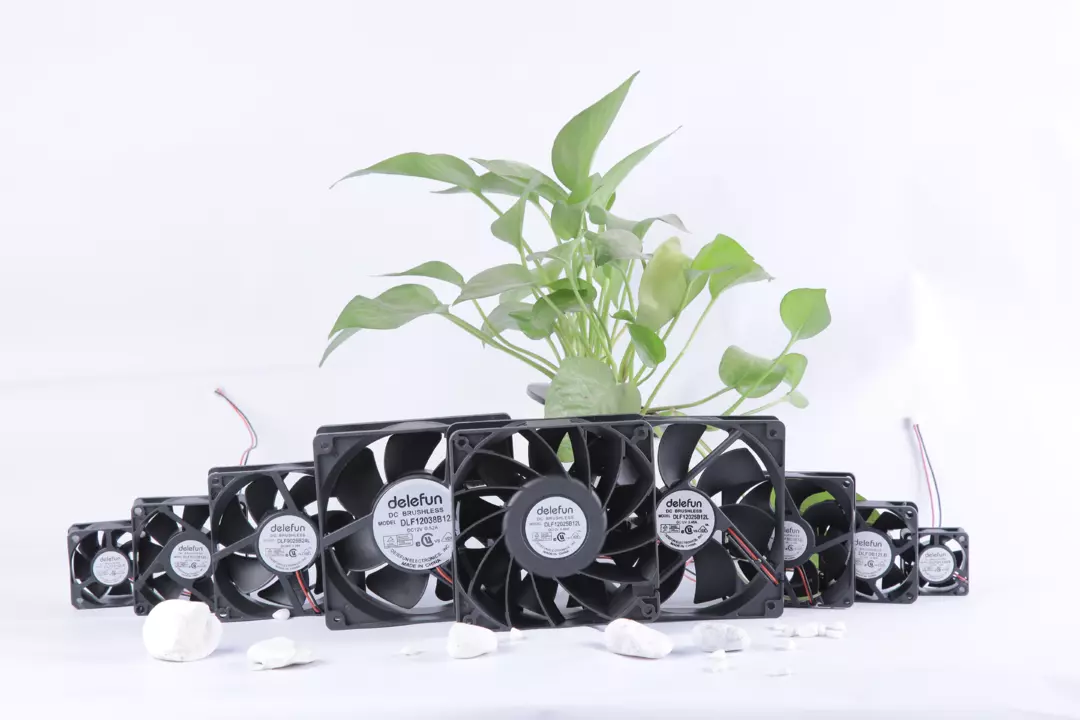
As electronic devices, industrial systems, and intelligent infrastructure continue to advance, the heat generated during operation is steadily increasing. Ensuring stable operating temperatures while maintaining performance has become a core design challenge. In this context, cooling fans remain one of the most reliable and essential components in thermal management systems.
Whether in servers, communication equipment, or industrial control systems, excessive heat can lead to a range of issues, including performance degradation, accelerated component aging, and increased risk of system failure.
Effective thermal management is not about extreme cooling—it emphasizes controlled and stable temperatures. By continuously and evenly removing excess heat, systems can maintain reliable operation over extended periods.
Among various cooling methods, air cooling remains the most widely adopted, and cooling fans serve as the central executing element. Their role is not to drastically lower temperature but to:
Create a stable airflow path
Prevent localized heat accumulation
Balance internal temperature distribution
In practice, cooling fans work alongside structural design, airflow channels, and temperature control strategies to achieve optimal thermal performance.
The key to effective thermal management is not simply fan speed but whether air flows along the intended path. Proper airflow can significantly improve cooling efficiency, whereas turbulent or blocked airflow can create hotspots.
In server chassis, industrial equipment, and enclosed control cabinets, cooling fans are often used to maintain continuous and predictable airflow, ensuring that heat is effectively carried away from critical components.
With increasing emphasis on energy efficiency, thermal management systems are evolving toward more sustainable operation. Compared to frequent start-stop cycles or overcooling, continuously operating cooling fans can maintain stable temperatures with lower energy consumption.
In many applications, direct-current cooling fans are preferred due to their controllable power usage and reliable long-term operation, helping systems balance energy efficiency with thermal stability.
Cooling fans are applied across a wide range of industries, with each sector having unique requirements:
Servers and data centers: Reliability and continuous operation
Telecom equipment: Efficient cooling in compact spaces
Industrial control systems: Environmental adaptability and stability
Smart devices and infrastructure: Low power consumption and system integration
Across these scenarios, cooling fans often work quietly in the background, yet play a critical role in ensuring system stability.
As device power density continues to increase, thermal management will rely more on system-level design rather than individual component performance. Cooling fans are increasingly integrated into intelligent control and energy optimization strategies, becoming part of the environmental management system rather than standalone hardware.
In modern device ecosystems, cooling fans remain a foundational component of thermal management. By providing continuous and stable airflow, they help systems maintain controllable temperatures and ensure long-term operational reliability.
When thermal management is treated as an integral system capability rather than an add-on function, the value of cooling fans becomes both clear and indispensable.


Global shipping with stable lead time
Within 30 days for an exchange
24 hours a day, 7 days a week
Pay with Multiple Credit Cards